Police Escort to Wollankstraße, Berlin
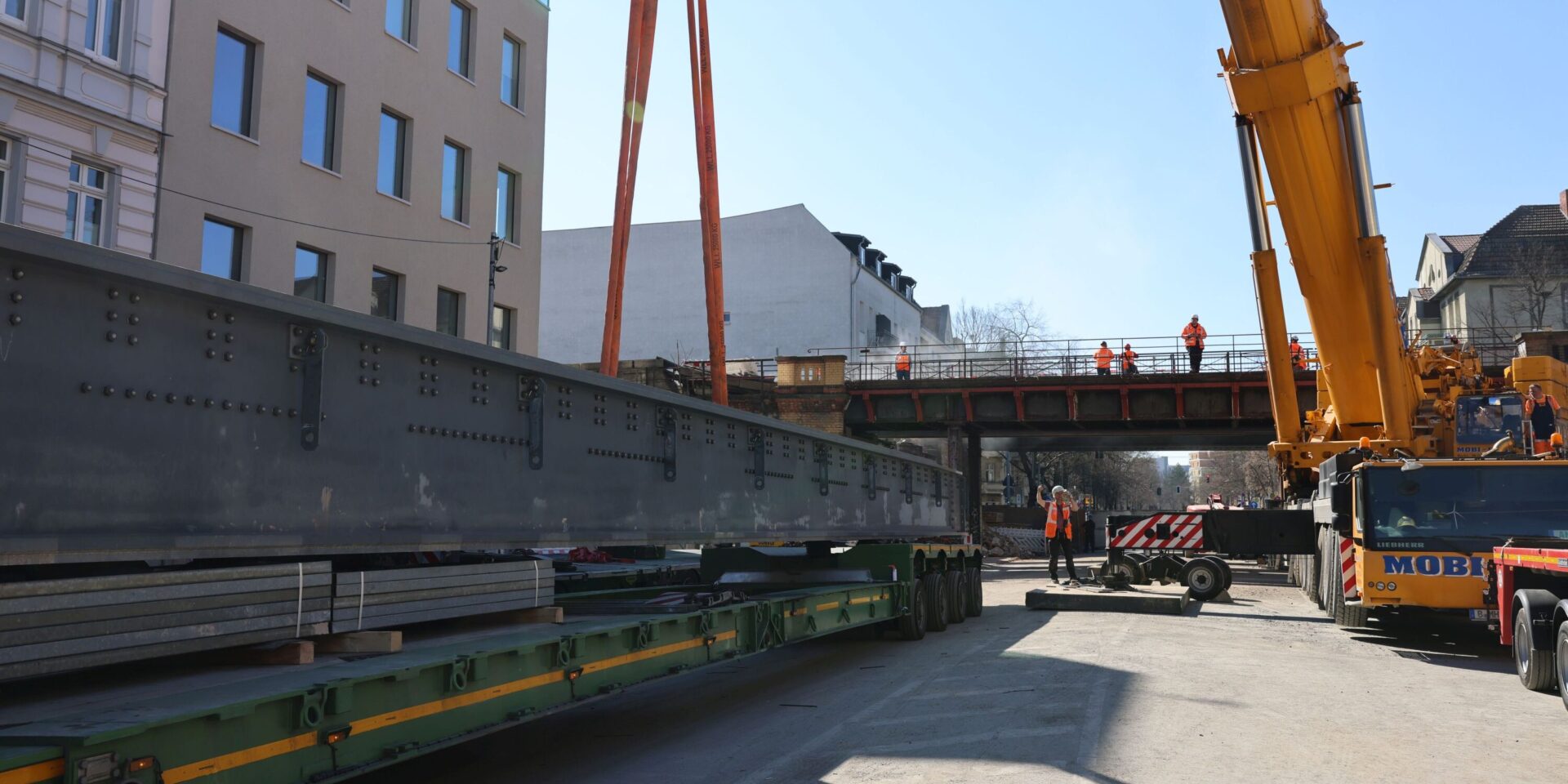
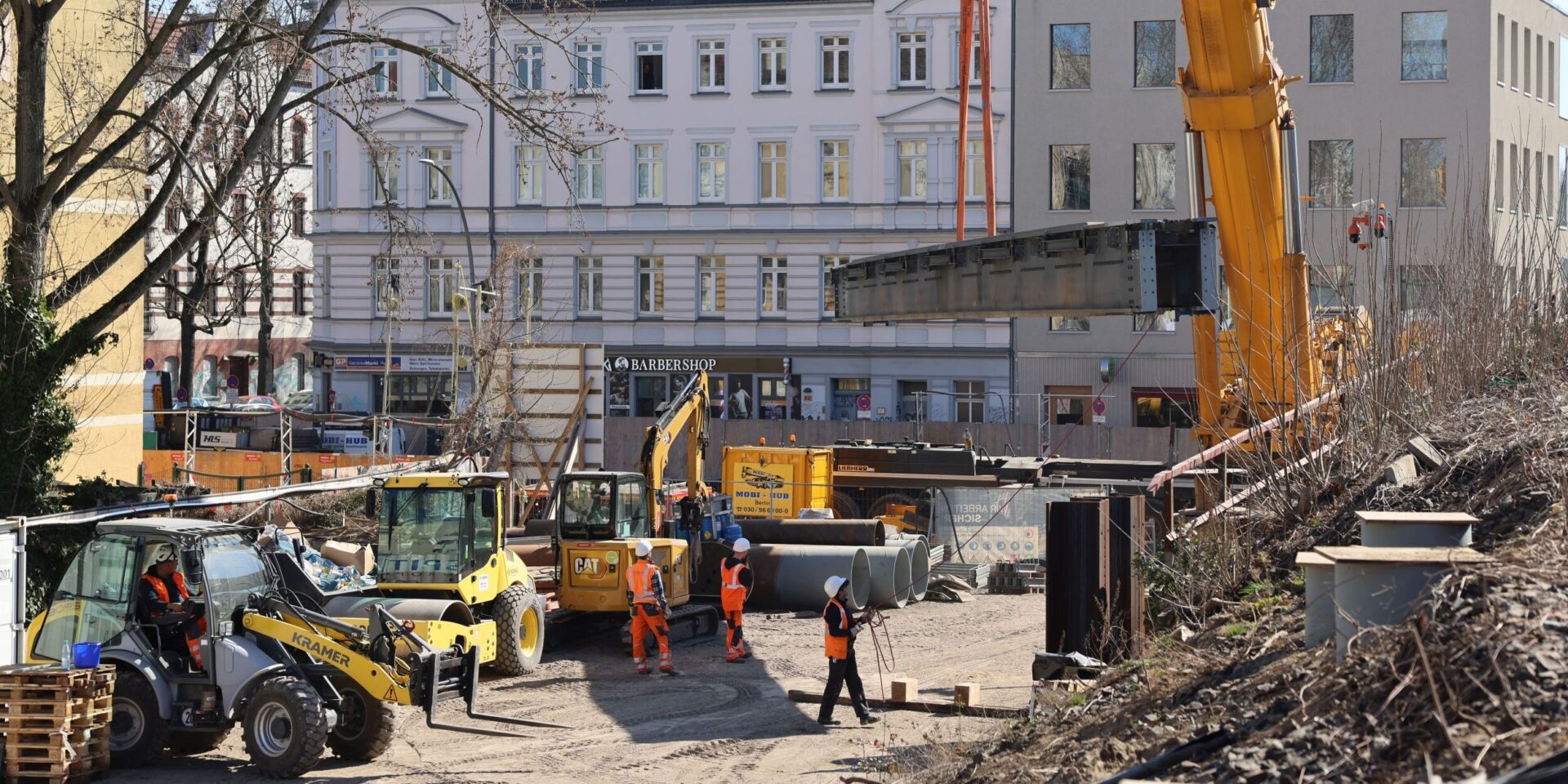
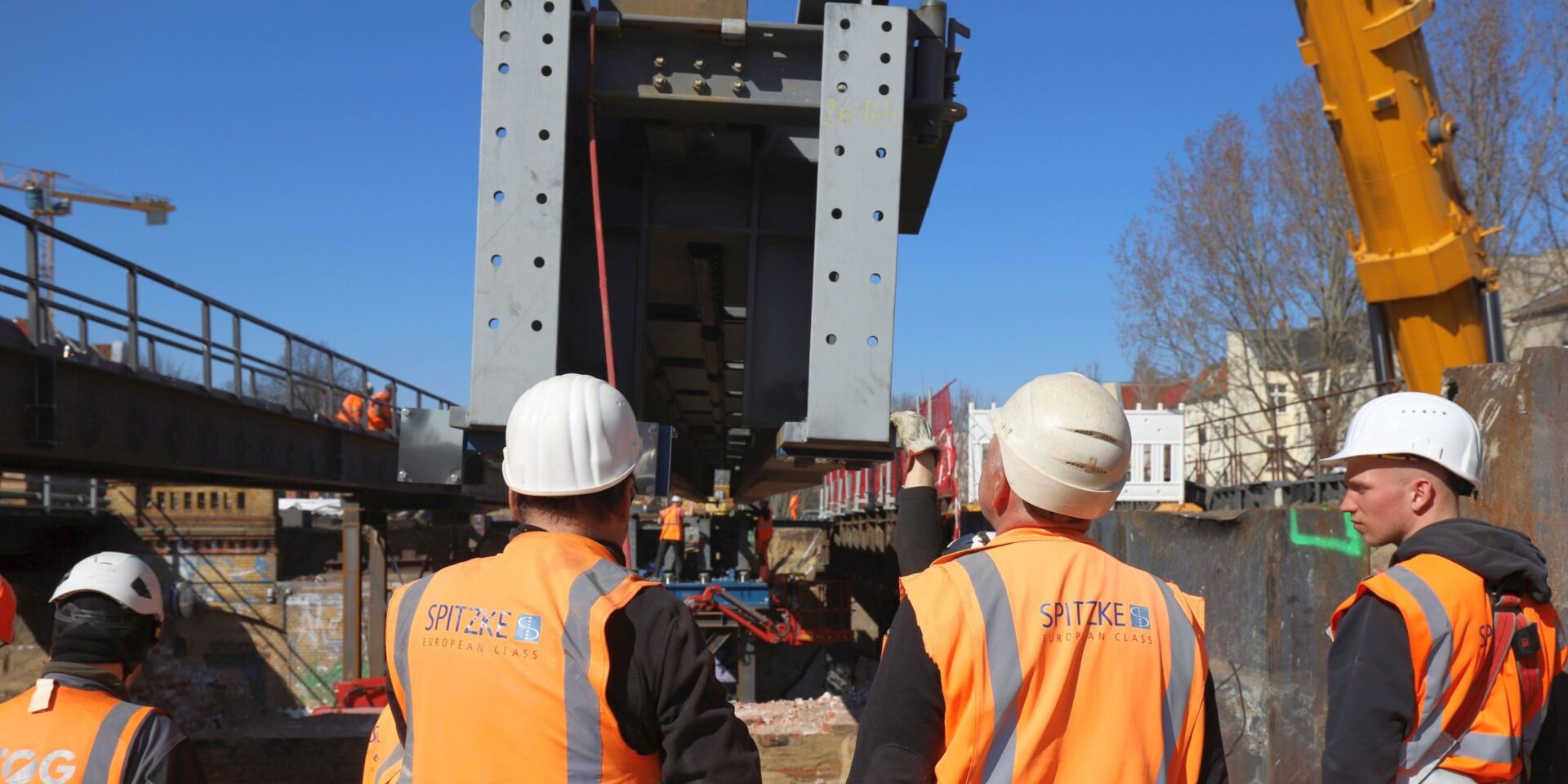
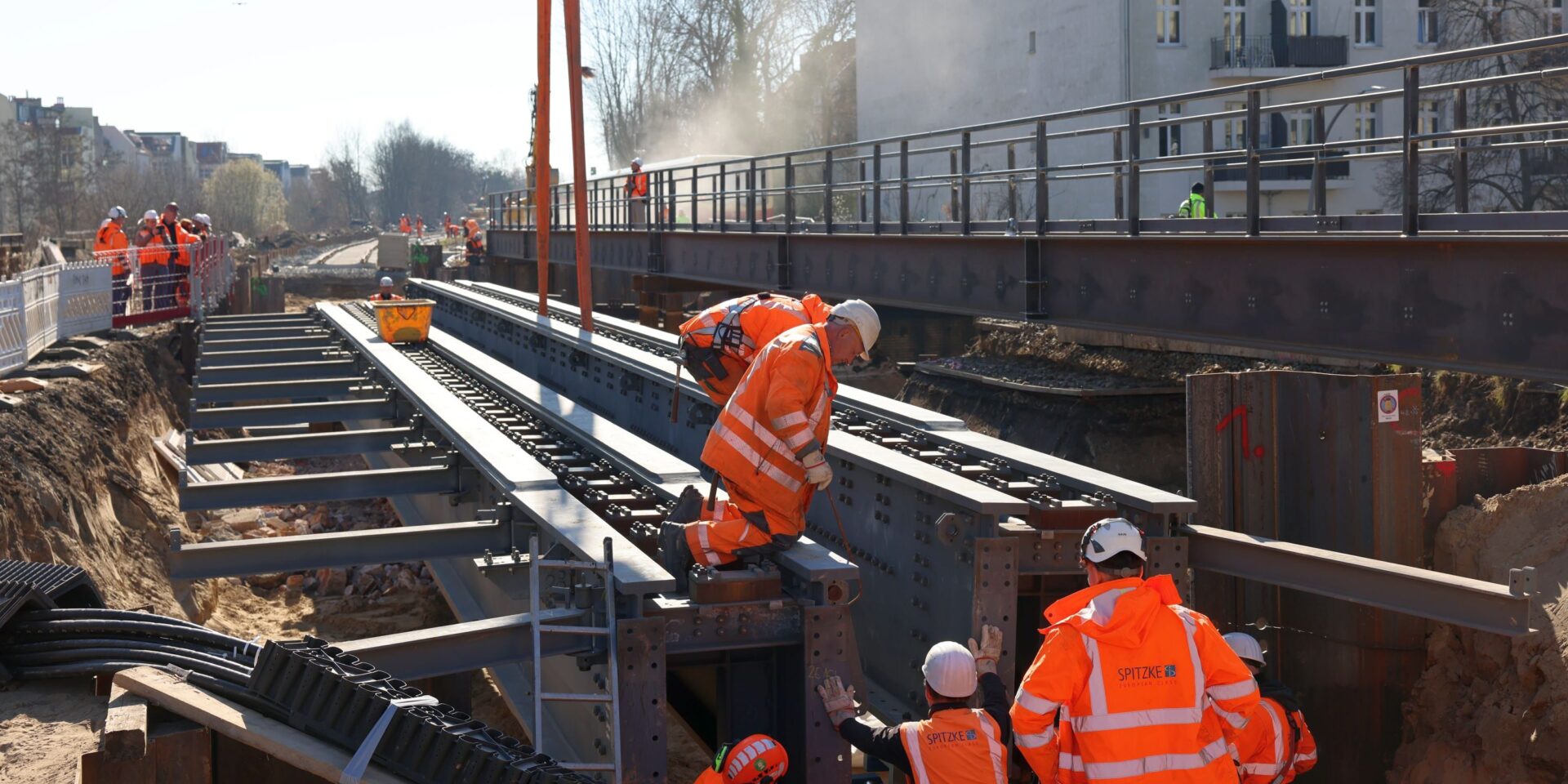
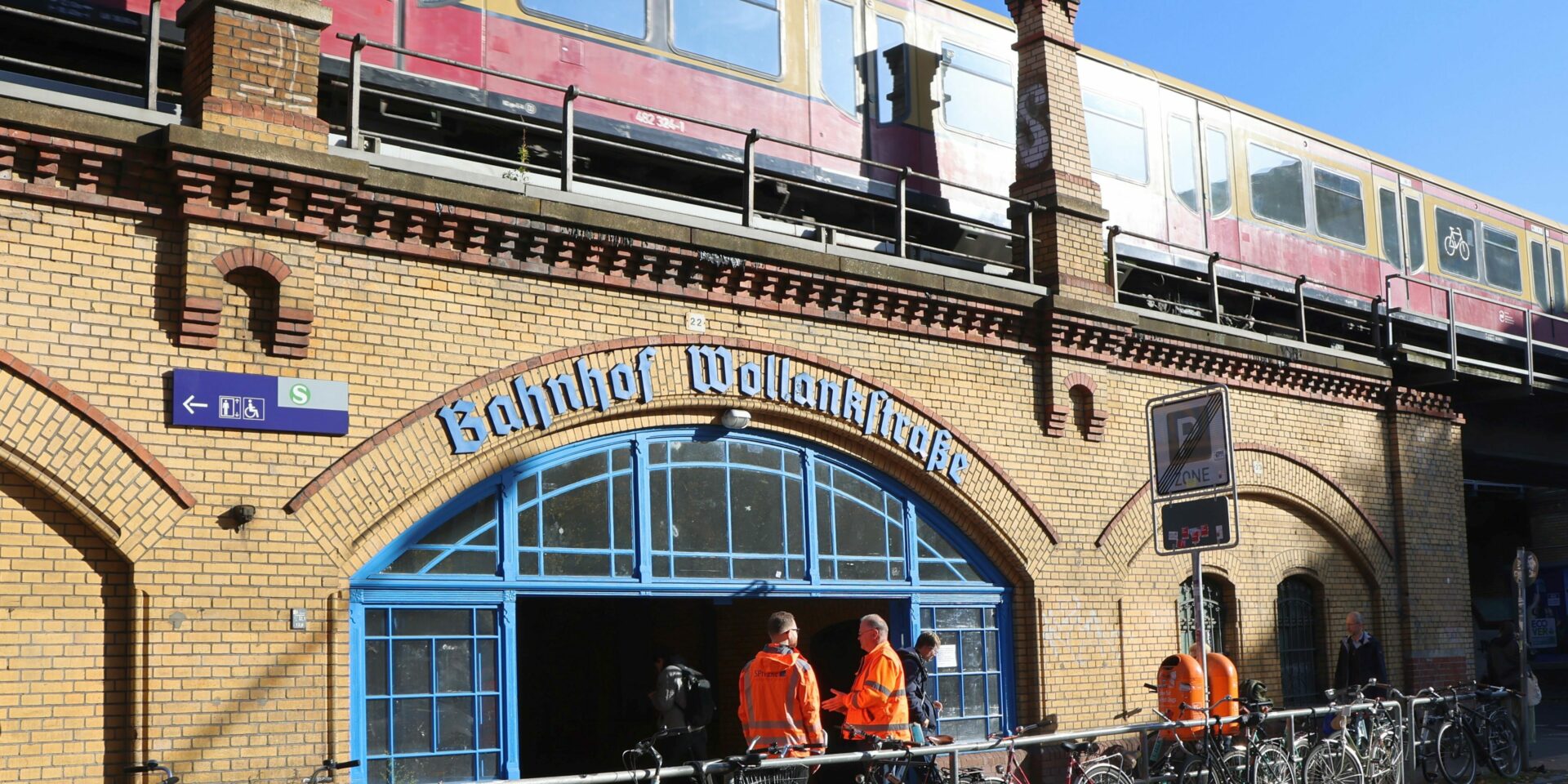
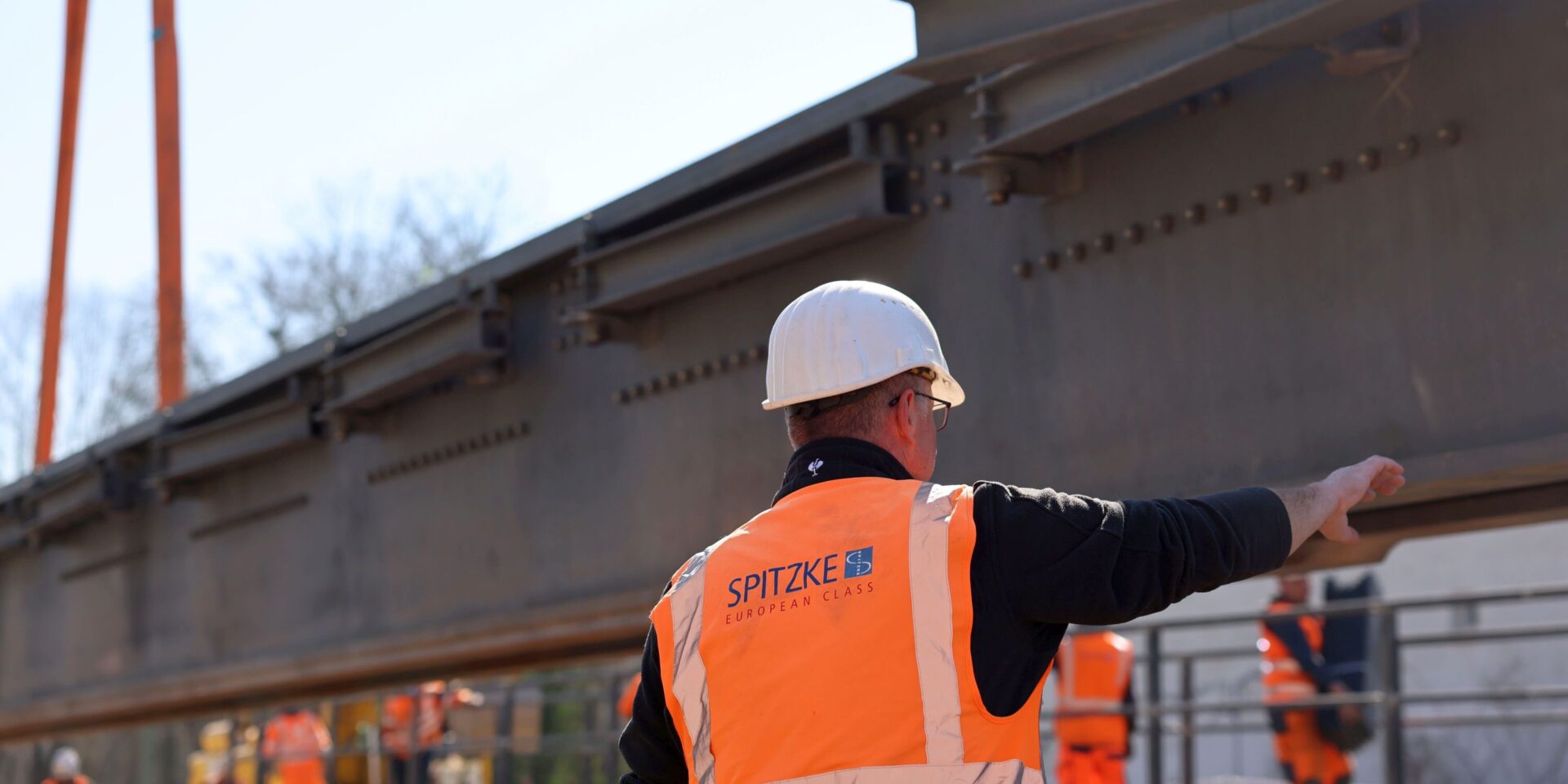
The Wollankstraße railway-overpass project has reached the critical construction stage 3. The tracks and old bridge components have been removed to make way for new structures. Several bridges were installed on Wollankstraße while police used their emergency lights. Where only a few weeks ago the tracks still ran past Wollankstraße S-Bahn station, there is now a sequence of two cable support bridges. The future cable routing across the railway overpass plays a central role in the upcoming construction stages. The same principle applies to the tracks as to the cables: two temporary support bridges, each 27 m in length, were connected on each side of the track, then aligned, surveyed, and “floatingly” mounted on special bearing structures known as point-tilting bearings. This made it possible to construct the temporary diversion track during the 3rd stage of construction. This will carry S-Bahn and long-distance rail traffic until 2027. The diversion track now runs across a steel structure weighing approximately 180 metric tons in total, which was transported to the site in four sections.
To the Installation Site with Police Escort
Because the four trucks carrying the twin trusses for the temporary bridges were not only extremely heavy but also exceptionally long, they required four hours to cover the remaining 25 km of their journey through the capital despite being accompanied by six police escort vehicles. With emergency lights and sirens, the police escort ensured that roads and intersections were cleared for the oversized special convoy. Only this way was the cable support bridge, which had been built the previous day, able to reach Wollankstraße at the last possible moment. This was also thanks to a special permit for daytime transport granted by the police.
Construction of the Pedestrian Tunnel
Why is a support bridge with a length of 54 m required to cross an otherwise “normal” two-lane road including the sidewalks? This generous construction clearance is required by our specialists from the Large Scale Projects/Structural Engineering division, as they are constructing not only a new access to the Wollankstraße S-Bahn station and the abutment for the future bridge beneath the tracks, but also an additional pedestrian tunnel. This tunnel will become essential if, in the future, the sidewalk along Wollankstraße is replaced by a tram line.
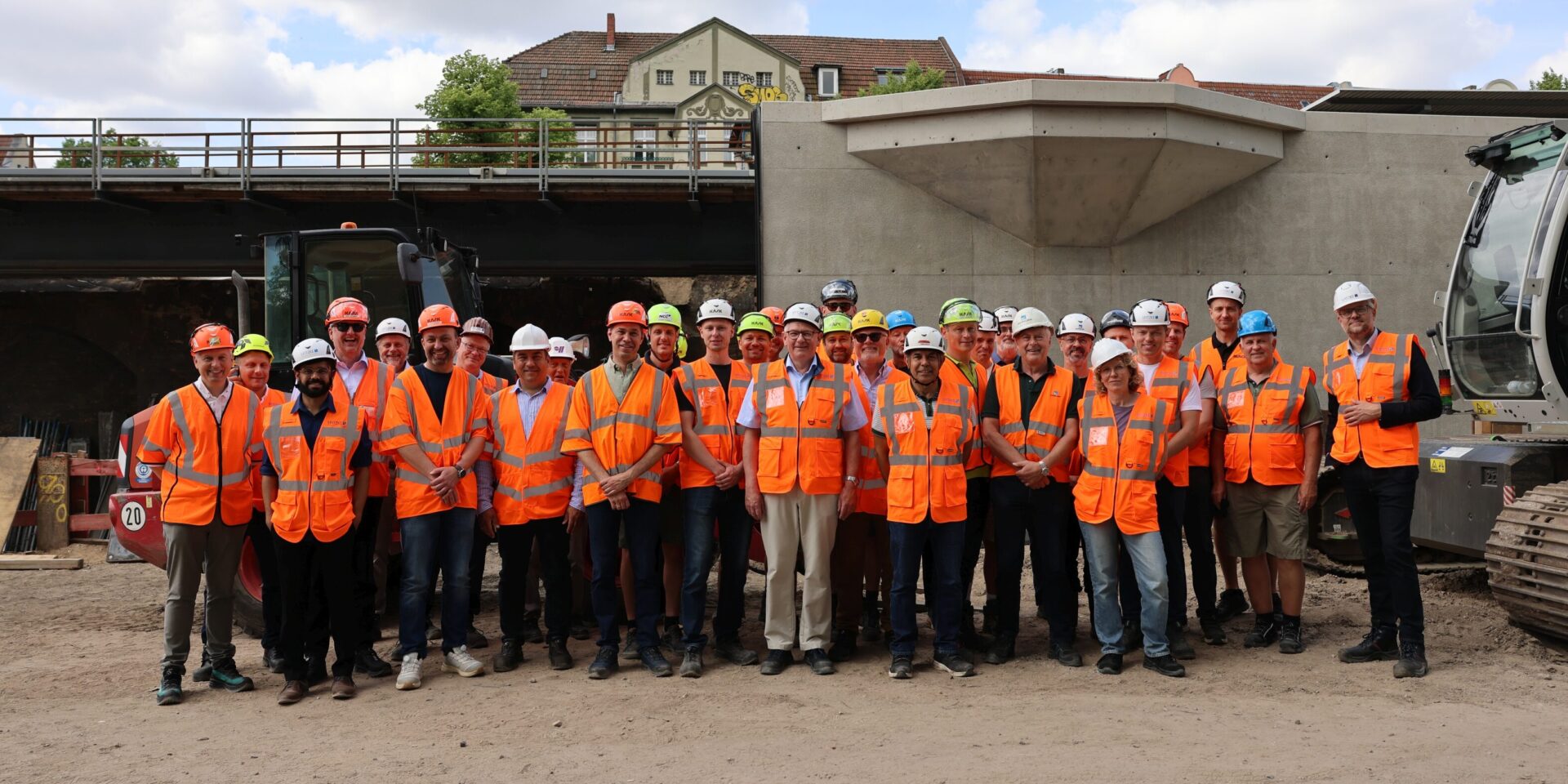
The installation of the four temporary bridges was spectacular and undoubtedly extraordinary—even for our experienced engineers, site supervisors, and bridge construction crews. Successful execution required numerous prerequisites that our teams had established well in advance. One example is a track crossing approximately 65 m in length, for which special heavy-duty cable troughs were installed beneath the track. The fact that the diversion track was able to go into operation on schedule at the end of March is thanks to the efforts of many teams.
Many Technical and Professional Trades at Work in Wollankstraße
Key contributions were made by our teams in track and underground cable construction, as well as the Equipment/Electrical Engineering sub-departments – electrical rail, 50 hz, signaling and control technology and telecommunications, all whose cables were routed on the new support bridge. The same applies to the 30 kV cables, which are routed in separate ducts due to their high voltage. The tamping machine marked the end of the closure.
The diversion track was completed on schedule at the end of March and will stay in this temporary configuration until 2027. The teams from the Equipment / Electrical Engineering department and the Großbeeren branch have now paused their activities. Our specialists from the Major Projects / Civil Engineering Departments will prepare the concrete structures for the next construction phase.